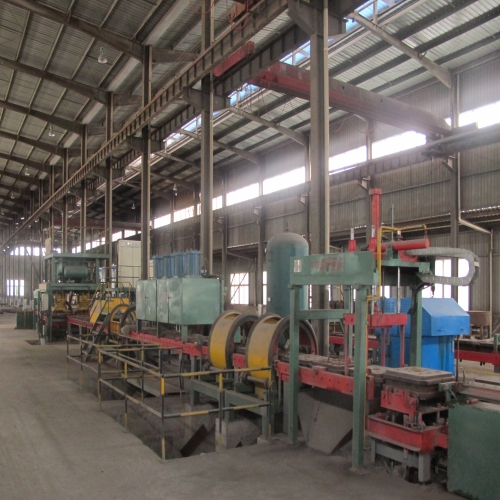
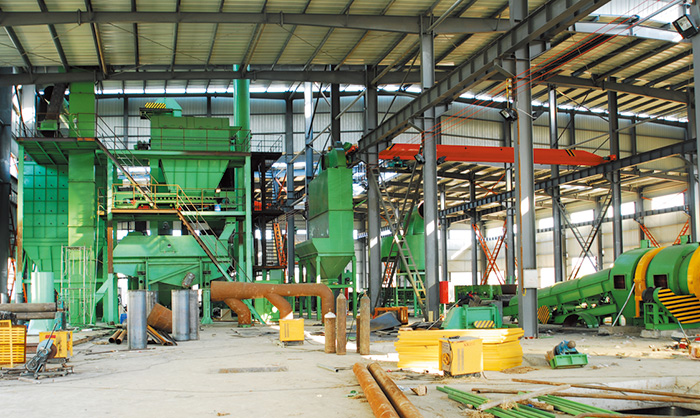
A foundry heat treatment furnace is an essential piece of equipment used to alter the physical and mechanical properties of metal castings after they have solidified. By subjecting castings to controlled heating and cooling cycles, these furnaces relieve internal stresses, improve machinability, and enhance strength, ductility, and toughness. The primary objective is to achieve a specific microstructure that meets engineering requirements without changing the casting's overall shape.
The design and type of furnace depend largely on the production scale and the metallurgical process required. For batch operations, common designs include car bottom furnaces, chamber furnaces, and pit furnaces . Car bottom furnaces are particularly popular in foundries, with capacities ranging from 5 to 100 tons per load. In these designs, castings are loaded onto a rail-mounted car that is then rolled into the heating chamber, allowing for efficient handling of heavy or bulky components . For continuous production, conveyor-type furnaces with multiple heating zones are employed, enabling a steady flow of castings through preheating, soaking, and cooling stages .
The specific heat treatment cycles vary based on the metal and desired outcome. For ductile iron, processes such as annealing, normalizing, and austempering are common. Annealing typically involves heating to 850–900°C followed by slow cooling to produce a ferritic matrix, which improves ductility . Austempering, on the other hand, requires heating to 850–950°C, quenching to an intermediate temperature range of 230–400°C, and holding for one to two hours. This produces a bainitic structure known as austempered ductile iron (ADI), which offers an exceptional combination of strength, ductility, and toughness, making it suitable for demanding applications like gears and crankshafts .
Modern foundry heat treatment furnaces often incorporate advanced features to improve efficiency and process control. High-velocity gas circulation, often achieved through strategically positioned nozzles, ensures uniform heat transfer across the load . Atmosphere control is another critical factor. For certain processes, a reducing or inert atmosphere is maintained within the furnace chamber to prevent oxidation and scaling on the casting surfaces during high-temperature exposure .
In summary, the foundry heat treatment furnace is a versatile tool that transforms as-cast components into reliable, high-performance parts. Its selection and operation are dictated by the specific alloy, the required mechanical properties, and the production volume, making it a cornerstone of quality assurance in the modern foundry.